Thứ Ba, 18 tháng 11, 2014

Mountain Climbing in Halong Bay

Halong Bay cruise is one of the most majestic climbing areas of the world. There are over 3000 limestone islands in the Halong Bay region of Vietnam and we hardly scratched the surface in our two week quest to explore them. The area has several sport climbing routes and has vast potential for further development. It is unusual to spend an entire climbing trip on a boat, but then it is unusual to do over 40 new routes without using a rope.

All professional climbers coming to Halong agree that Halong bay is the paradise of adventurous mountain climbing as it has thousands of islands with high lime-stone mountains.  Tourist could see countless beautiful limestone faces. To enjoy this stunning archipelago of karsts you can try climbing Rock Mountain. If you never climb Rock Mountain, guides will guide some base skills and some notice during climbing time. After a brief introduction, guides will outfit you with safe and comfortable certified UIAA harnesses, shoes, and helmets.  With the coaching of our experienced guides, climb as high as you like over the emerald waters of Halong Bay.  On a clear day your cruise home will include a majestic sunset, over calm waters, speckled with islands.

Tourists will excited to subdue high of mountain and reach true climbing experience.  From the high, tourist could obverse overview of Halong bay. There is no better way to enjoy Vietnam than getting high over the emerald waters rock climbing in Ha Long Bay. Rock climbing in Halong bay is the most unique and exciting way to make your trip to Ha Long Bay most memorable.
Mountain Climbing in Halong Bay

This activity is usually combined with kayaking to explore natural environment of Halong Bay. You can kayak into hidden lagoons, through limestone archways, grottoes, and floating villages. After that you will climb Rock Mountain to obverse overview clearly. Next, you could take part in activities: soak up the sun, sightseeing, swim, beach hop, and watch the wheeling black kites as they dive for fish.

Thứ Năm, 6 tháng 11, 2014

Ha Long Squid Ball

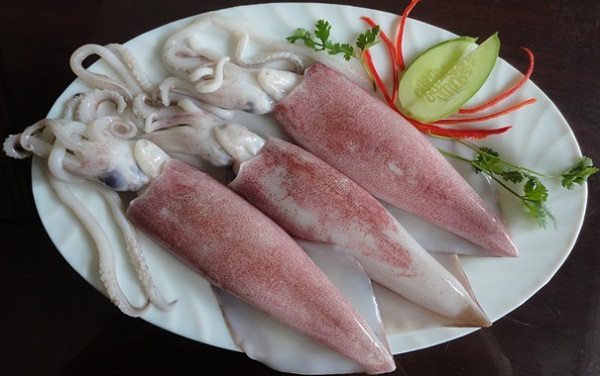
Ha Long Squid Ball- one of the most popular specialties of Quang Ninh has been named in the list of the top 50 recipes of Vietnam, according to the evaluation standard of Vietnamese specialties issued by the Vietnam Guinness Book of Records.

The dried squid ball has a fresh yellow, sweet- smelling and a nice taste
According to a survey’s results in 2012 of the Center for Agricultural Development and Research (under the Vietnam Agricultural Science Institute) in Ha Long city, this traditional dish was discovered in 1946 and was firstly made by Tai Le- a famous chief who served the domestic and international visitors in Hon Gai (during the French colonial period). Hoai Phuong-one of the 3 most well-known squid ball makers in Ha long city, is the one who was taught by Tai Le since 1946 and is now still keeping his old mortar.

Braying is the traditional technique to make the special quality of Ha Long squid ball
To date, Hoai Phuong has over 100 year experience in making squid ball. The owner - Mr. Dang Manh Hiep shared that to be a professional squid ball maker, you must be clever, meticulous, and hardworking. The very first step to make a nice dish of squid ball is selecting the squids. We should choose the squid with fresh and thick carapace on the back with a weight of around 0.8 to 2.0kg.

It is very scrupulous to “operate” the squid, too. We need to omit the bowel and the vesicle, remove all the skin. We should keep the fin on the two sides of the squids because this part would create the crunchy taste after cooked. Then, wash them with the water and slice them into pieces.

If we want the squids to be crunchy and fragrant, we should grind them in a stone mortar by our bare hands. Put the squids into the mortar one by one. It is recommended that we should not make them well kneaded, especially with the fins. In that way, the squid would be stickier and some parts that are not well grinded yet will turn to be very crunchy when you eat. When grinding, add some peppercorns to make them mix steadily with the squid meat because later the squid would stick very hard.

After that, adding some chopped onion, a little bit fish sauce and some spoons of liquid lard and mix them continuously in about 2 minutes.

Depending on the liking of each person, we can create different shapes for the squid ball. However, you should remember to prepare a bowl of water and put a little oil on your hands to prevent them from being sticky with the squid. Using a spoon to take a little squid and then put it in your hands, roll it into a ball and press it.

To fry the squid ball, we should use a sunken pan. Pour the oil into nearly half of the pan. Keep the oil hot, then lower the flame and fry the squid ball. Turn the balls over steadily; keep the flame in a medium level, not too strong, not too weak. When they turn into yellow, take them out and put them on the grill to keep them dry (if not the balls would be very greasy).

Tourists are buying squid ball at Thoan squid ball store.( in Ha Long I Market, Ha Long city)
Squid ball using with sticky rice has already become a famous specialty of the people of Quang Ninh. In Ha Long, there are even chains of street where people specialize in making this dish.

Hiep added that during the tourism season, an average of 70-80 kg of squid ball is sold on regular days and 100kg on peak days. The customers are mainly tourists from Hanoi, Thai Binh, Thai Nguyen...They buy squid ball to give their relatives and friends as a special present from Quang Ninh. Travel to Vietnam

Pham Thi Giang- a tourist from Thai Binh province commented that Ha Long squid ball is a very delicious and unforgettable dish. It can be served with white sticky rice, Cuon cake and fish sauce with pepper. It costs around VND 350,000-370,000/kg.
Ha Long Squid Ball
Ha Long Squid Ball

There are 30 units specialized in making and selling squid ball within Ha Long city; of which 23 units based in Ha Long I market and 7 in Ha Long II market) under a wide range of well-known trademarks such as Thang Hue, Hien Nhung, Tien Chuyen, Kim Thoa, Thoan, Lan Diep, Hoai phuong... Squid ball is also made in hotels, restaurants.... Paradise CruiseJasmine Cruise

It is reported that the Ha Long City People’s Committee is considering and drawing geographical indication for Ha Long squid ball. The promotion Halong squid ball product helps to enhance its competitive advantage in the market, protecting its reputation and prestige. This is a good opportunity to introduce this specialty to the national and international market.

Thứ Bảy, 30 tháng 8, 2014

Chọn máy tiết kiệm điện

Chọn máy tiết kiệm điện

Hiện nay trên thị trường có 2 dòng máy điều hoà giá rẻ là máy thông thường và máy biến tần.

Máy thông thường là máy nén kiểu đóng ngắt ON – OFF, khi điều chỉnh năng suất lạnh và nhiệt độ phòng. Đặc điểm của loại máy này là nhiệt độ trong phòng dao động mạnh, máy làm việc theo chu kỳ đóng ngắt và tiêu thụ điện năng tương đối cao.

Máy biến tần là loại máy mới, hiện đại, điều chỉnh năng suất lạnh và nhiệt độ phòng bằng cách thay đổi vòng quay trục khuỷu máy nén. Nhờ cách điều chỉnh này cũng như nhờ thay động cơ xoay chiều bằng động cơ một chiều, ống mao bằng van tiết lưu điện tử... nên tiêu tốn điện năng có thể giảm tới 50% so với máy thông thường.
Chọn máy tiết kiệm điện


Tất nhiên giá máy này cũng đắt hơn khoảng 30%. Tuy nhiên, giá đầu tư ban đầu cao hơn, nhưng sẽ nhanh chóng được bù lại nhờ giá vận hành giảm và vòng đời của máy cao (khoảng 13 năm).

Nên chọn loại điều hòa tủ đứng chính hãng biến tần để tiết kiệm điện năng.
Chú ý khi lắp đặt điều hòa

- Phòng phải được hút bụi, làm vệ sinh sạch sẽ, tường và trần nhà thường được lau rửa. Ngoài ra, cần lưu ý lắp đặt điều hoà ở vị trí sao cho dòng không khí có thể được phân phối đều khắp phòng. Trong phòng bạn cũng nên để một chậu nước mát.

-  Không để dàn nóng của điều hòa âm trần chính hãng bị ánh nắng chiếu vào và tránh để dàn nóng bị cản gió. Hướng đặt dàn nóng tốt nhất là hướng bắc hoặc hướng nam. Nếu lắp đặt ở hướng đông hoặc tây thì nên có mái che để che nắng, mái che này không được cản trở luồng gió lưu thông qua dàn nóng.

- Dàn lạnh nên được lắp ở vị trí hợp lý để có thể tỏa lạnh đều trong phòng và đường gió ra không bị cảm trở bởi các vật dụng khác.

- Lắp đặt dàn nóng và dàn lạnh càng gần nhau càng tốt, độ chênh lệch giữa 2 dàn càng nhỏ càng tốt. Như vậy sẽ tiết kiệm điện hơn.

- Phòng lắp máy phải khô ráo với độ ẩm tốt nhất từ 30% đến dưới 60% để các loại vi khuẩn, nấm không có điều kiện phát triển.

Cách chọn và sử dụng điều hòa để tiết kiệm điện năng - Ảnh 2
Vệ sinh sạch sẽ phòng trước khi nắp điều hòa.
Điều chỉnh nhiệt độ vừa phải

Chỉnh nhiệt độ càng thấp, máy lạnh tiêu thụ điện càng nhiều hơn. Chỉnh nhiệt độ tùy vào khả năng thích ứng của mỗi người. Tuy nhiên, nếu nhiệt trong phòng chênh lệch quá lớn so với bên ngoài là điều không có lợi cho sức khỏe.

Theo khuyến cáo chỉ nên chênh lệch dưới 10 độ C (tốt nhất là 7 độ) và không nên dưới 20 độ C. Ví dụ nhiệt độ ngoài trời là 36 độ, nhiệt độ trong phòng nên đặt ở mức 26 - 28 độ. Bạn có thể sử dụng thêm quạt điện, như vậy sẽ đạt hiệu quả cao và tiết kiệm điện.

Nếu máy không có chế độ ngủ, hãy tăng nhiệt độ phòng thêm 2oC, nếu cảm thấy nóng lúc đầu, hãy bổ sung thêm quạt trong vòng 1h. Không đặt nhiệt độ thấp đến mức phải nằm đệm và đắp chăn khi ngủ.

Hãy tắt máy điều hoà khi ra khỏi phòng, tắt bằng điều khiển từ xa, sau đó ngắt áp tômát. Nếu chỉ tắt bằng điều khiển máy vẫn tiêu thụ khoảng 15W.

Cách chọn và sử dụng điều hòa để tiết kiệm điện năng - Ảnh 3
Hãy tắt máy điều hoà khi ra khỏi phòng, tắt bằng điều khiển từ xa, sau đó ngắt áp tômát.
Chỉnh hướng gió

Ở máy lạnh có những cánh để điều chỉnh hướng gió sang trái hoặc phải, hướng lên trên hoặc xuống. Do ảnh hưởng độ quay của quạt và vị trí của các ống dẫn hơi lạnh bên trong, nên đa số máy điều hòa nhiệt độ đều có xu hướng thổi hơi lạnh nhiều hơn về một phía của phòng. Bạn nên điều chỉnh hướng thổi lạnh vào khu vực cần thiết của phòng (giường tủ, bàn làm việc...). Từ đó, có thể chỉnh nhiệt độ ở mức tối ưu nhất.

Thường xuyên vệ sinh máy

Các bụi bẩn bám và tích tụ vào bề mặt dàn nóng, dàn lạnh, lưới lọc... làm trở ngại cho việc trao đổi nhiệt, làm máy chậm lạnh. Việc vệ sinh dàn nóng, dàn lạnh ở máy lạnh hơi phức tạp và có liên quan đến an toàn điện.

Bạn có thể nhờ thợ điện lạnh bảo dưỡng định kỳ (khoảng 6 tháng/lần). Còn lưới lọc bụi, vệ sinh dễ dàng hơn, khoảng một tháng/lần. Bạn có thể tự làm, tháo ra và rửa sạch bằng bàn chải và xà bông.